Lisa Li didn’t set out to sell flowers. She had a job in fashion, a full calendar, and no plans to leave it behind. But the pace wore her down. After years in New York, working long hours, pushing through stress and burnout, her body started pushing back. She was diagnosed with a thyroid condition. Doctors offered surgery or lifelong medication. She hesitated. Instead, she flew home.
Lisa was born in northeast China, in a province called Liaoning. Her grandmother used to serve her warm, herbal teas made from flowers and leaves. They were floral, comforting, and mostly unremarkable at the time. Now, years later, Lisa was seeking something slower and simpler. Something that made sense again.
In 2017, she and her mother traveled to Shangri-La, a mountainous region in Yunnan Province. It was remote. That was the point. The first day there, in a small teahouse, she was served a rose. Not rose tea. A whole rose. One flower in one cup. As it steeped in the hot water, it began to bloom again—petal by petal. Lisa watched it unfold. She drank the tea. And everything slowed down. She didn’t forget it.
She came home to New York and couldn’t find that flower anywhere. Not in stores, not online. There were rose-scented teas and blends with dried petals, but not that. Not a whole flower, dried at peak bloom, that came back to life in water. Lisa started looking.
Most people don’t think about where their flowers come from. Lisa had to. She knew she wanted to build something from the Shangri-La rose, but quickly ran into the same problem that most flower lovers run into—pesticides. Commercial flowers are grown for bouquets, not for drinking. They’re treated with chemicals and preservatives to last longer in transit. They’re not meant to go into your body.
It took her over a year to find growers who understood what she needed. She traveled, tasted, tested, and visited small family farms. She eventually partnered with three farms in Asia, each with their own flower: rose from Yunnan, chrysanthemum from Huangshan, blue lotus from a warm, humid region that Lisa doesn’t name on the packaging. Each farm harvested by hand. The flowers were grown without pesticides, dried slowly in the sun, and packed carefully so they wouldn’t shatter in shipping.
She called the brand “The Qi”—short for Qi, the Chinese word for life force or energy. She started with rose. Then chrysanthemum. Then blue lotus. All single-origin, all whole flowers.
The Qi doesn’t sell tea in the way most people think of tea. There are no leaves. No blends. No tea bags. No caffeine.
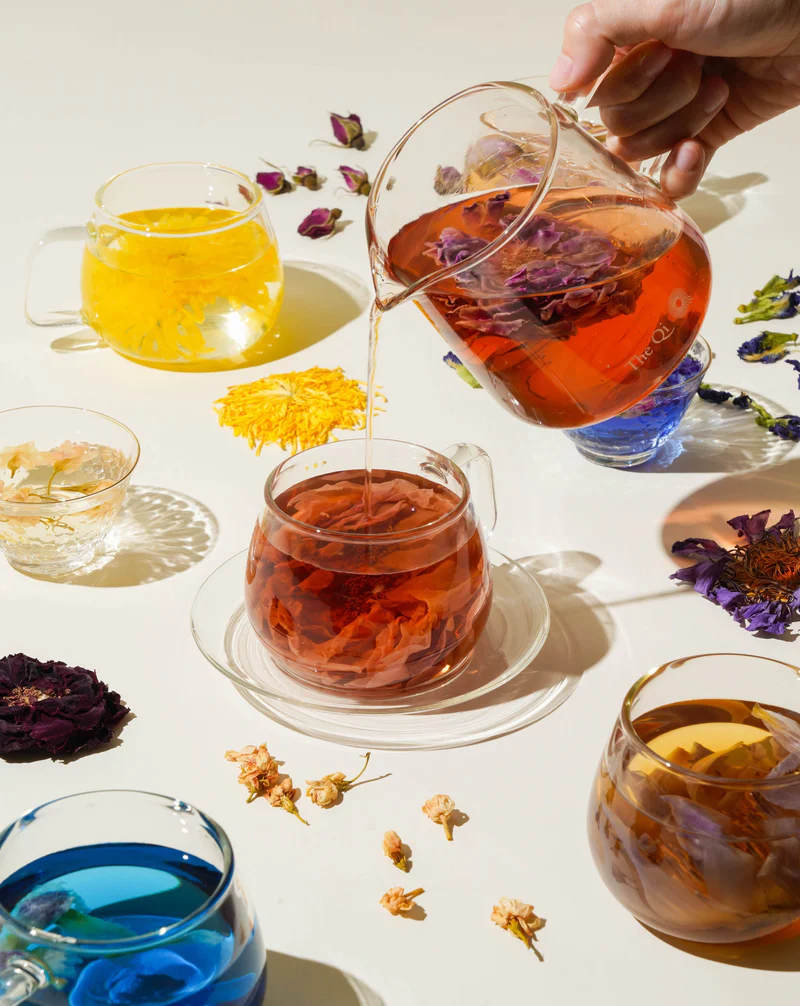
Each product is a single dried flower. You drop it into a cup of hot water. It opens. You drink the infusion. Then you refill it and drink it again. The second steep is milder, but still floral. Some people eat the flower afterward or use it in cocktails or desserts. Some don’t.
The Shangri-La Rose makes a pale gold tea with a soft rose scent and a slightly fruity finish. The Royal Chrysanthemum brews bright yellow, a little grassy, almost like chamomile but sharper. The Blue Lotus is the most delicate. Pale, almost neutral in taste, with a relaxing quality that some people describe as calming and others as sleep-inducing.
There’s no added flavoring. No fragrance oils. No blends. No caffeine. Lisa says it’s not tea. It’s a ritual.
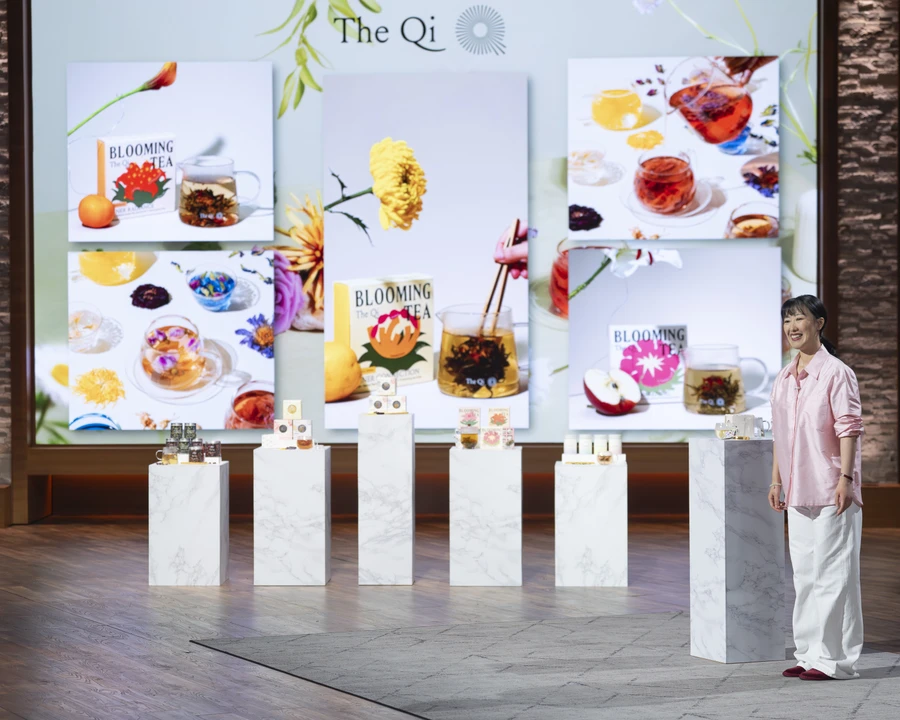
She packed orders from her apartment at first. Taught herself how to ship. Posted photos on Instagram of the flowers blooming in glass cups. When people asked what they were, she answered. When people asked if they could drink them, she explained.
Bloomingdale’s found her at a trade show. So did buyers from wellness boutiques. The Wing started serving her flower teas in their café. A few influencers posted about it. That helped. But most of the growth came from people trying it, liking it, and telling someone else. There weren’t many competitors. In the U.S., most people hadn’t seen flower tea before.
She kept her costs low. Used leftover packaging from other projects. Reinvested every dollar into product. When she made her first batch of tasting boxes—small samplers of rose, chrysanthemum, and lotus—it sold out. She didn’t hire a big team. Still hasn’t.
She eventually opened a small tea studio in Flatiron, just a few blocks from where she lives. People can visit on certain days, try the teas, and buy flowers to take home. It’s quiet there. There’s glassware on the shelves, and the room smells faintly floral even when no tea is brewing. Lisa runs it herself most days, sometimes with help.
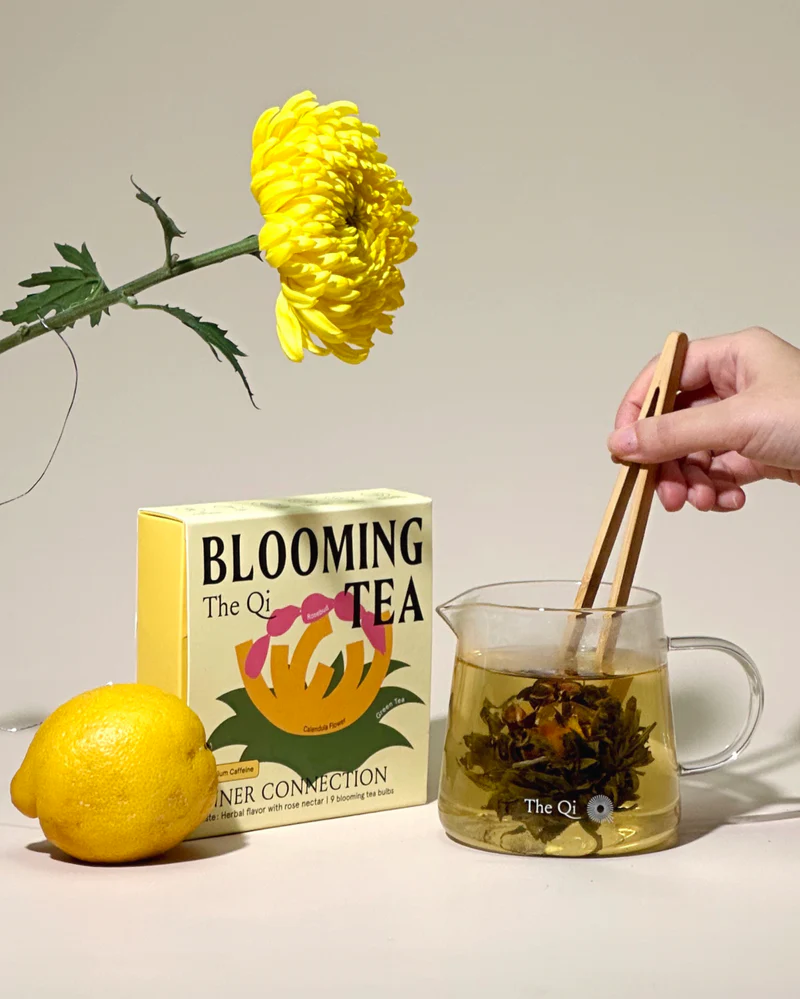
The Qi sells direct to consumers on its website and through a few select retailers. There’s a Floral Tasting Sampler. A cold brew set. Gift boxes. A tea pot made of borosilicate glass designed specifically to show off the blooming flowers. There are bundles with names like “Inner Radiance” and “Bloom & Shine,” but the core products haven’t changed.
There are still just three flowers. Each one is hand-picked, sun-dried, and packed whole. Each one brews about two to three cups. The packaging is minimal. The instructions are short. Add one flower to a cup of hot water. Steep for 3 minutes. Sip.
Lisa doesn’t make health claims. She doesn’t call the teas detoxifying, healing, or anti-inflammatory. She doesn’t promise sleep or energy or weight loss. She says the flowers make her feel good. That’s enough.
Some customers brew a flower in the morning instead of coffee. Others drink it at night to wind down. Some just like watching it bloom. Lisa says that’s the point. To slow down. To sit with something beautiful. To make a ritual out of a cup of hot water and a flower that opens again.