It started with a broken olive bar. Nikki Seaman was living in Atlanta when the grocery stores closed theirs down. Pandemic rules. She’d only just become an olive person—those briny, oil-soaked green ones you scoop into a little plastic tub at Whole Foods or the fancier Kroger locations. They were salty, chewy, sometimes spicy, always satisfying. She looked for an alternative, but what was left were jars of olives suspended in brine. The texture was off. They were soft in a way she didn’t like. She reached in with a fork, got a splash of oily liquid across her hand and sleeve, and stood there in the kitchen frustrated and hungry. There had to be a better way. Not a new idea. Just a better format.
She kept thinking about it. She had a background in consulting and brand strategy, had worked with food companies before, and had spent a stint at Whisps, the cheese crisp company, where she learned what it actually takes to develop and launch a snack. She knew olives were a “dusty” category—steady, underdeveloped, mostly sold in glass jars next to pickled onions and sun-dried tomatoes. No one had touched them in decades. Nikki decided she would.
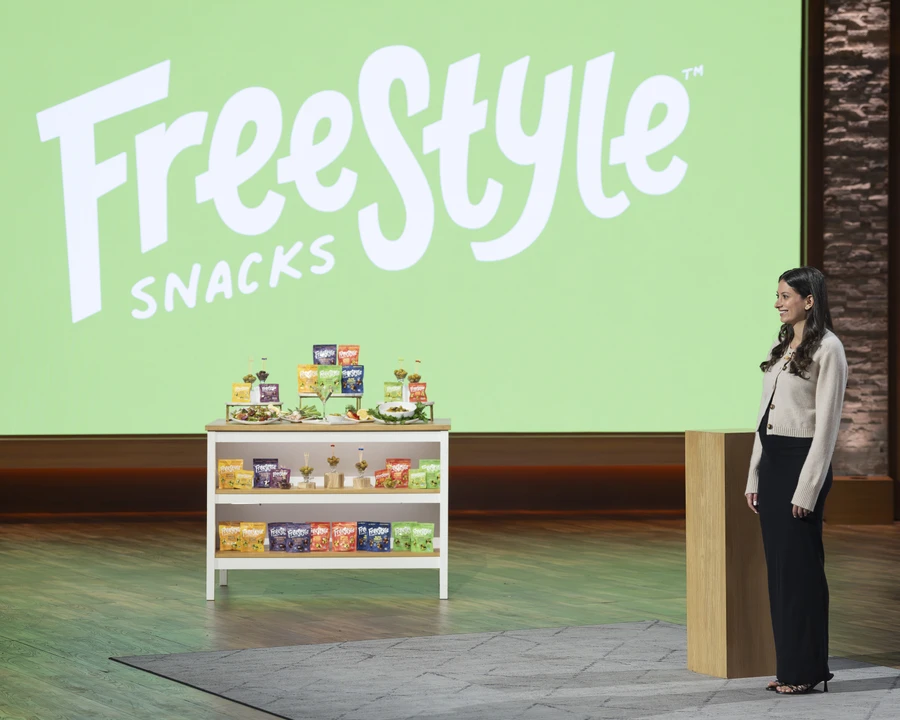
She started with blind taste tests in Piedmont Park. Three brands of jarred olives. One small batch of her own, hand-marinated with lemon, garlic, and good olive oil. People picked hers, over and over again. That was enough.
She sourced Greek olives. Kalamata, green, pitted. She wanted the good ones—larger, firmer, picked at the right time of year. No fillers. No artificial flavorings. No dyes. She added seasoning blends that actually tasted like something: chili, oregano, black pepper, lemon peel, garlic. Her goal was that you could open a pouch, eat a few, and feel like you’d been handed a tiny plate of mezze.
The packaging had to change too. No brine, no jars, no clanking glass. Just a pouch. Small, liquid-free, resealable. You could toss it in a bag. Eat it at your desk. Keep it in the glove compartment. No refrigeration, no draining, no cleanup. That was the whole point.
She ordered samples from packaging suppliers. Rejected most of them. One entire shipment had microscopic holes in the pouches near the zipper. She didn’t catch it until they were already filled. She had to throw them out and start over. She didn’t have a warehouse. She was still doing this from home.
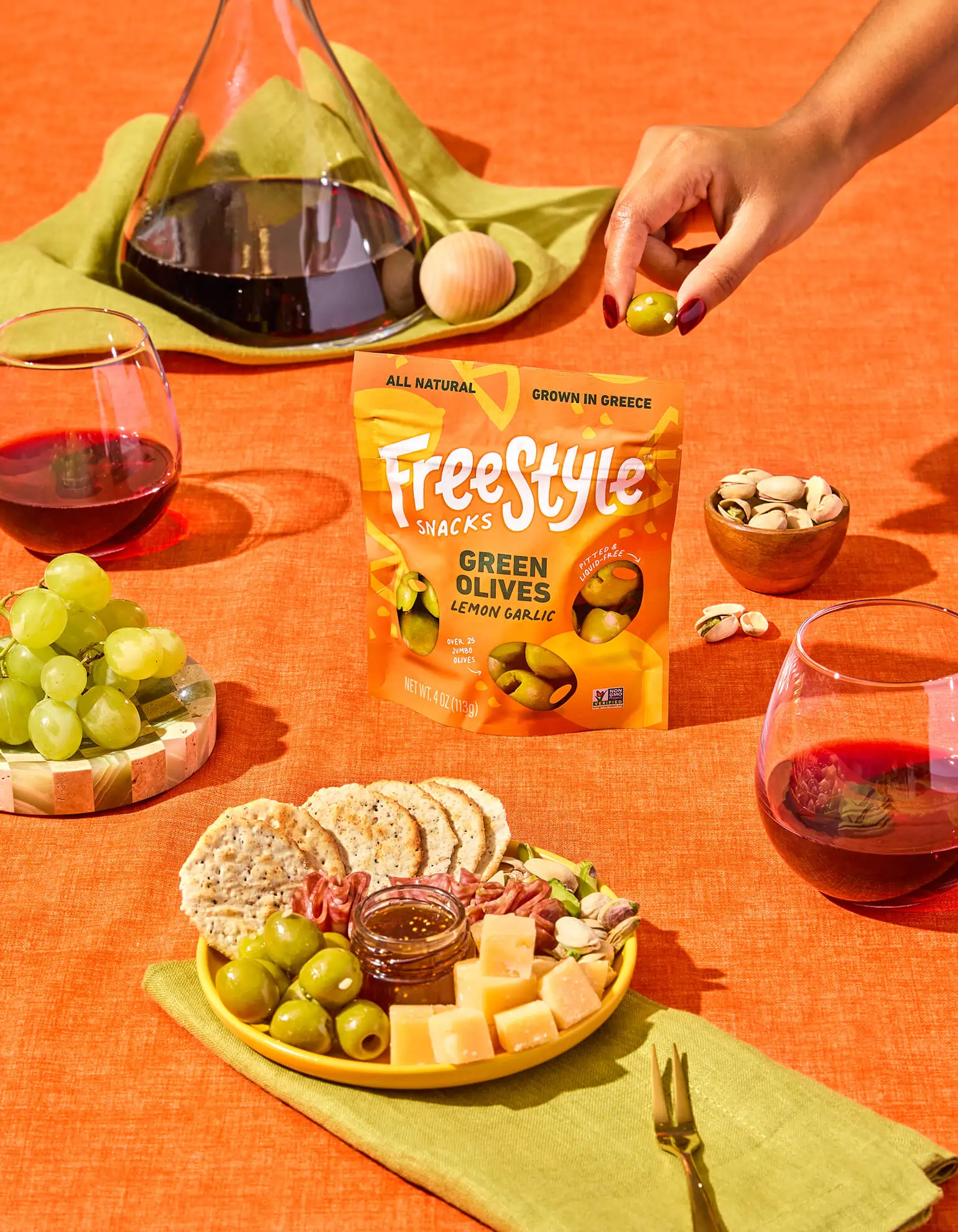
In early 2022, she launched Freestyle Snacks online. Three flavors. Lemon Garlic Green Olives, Spicy Chili Green Olives, and Classic Kalamatas in olive oil. The website went up. She posted a few TikToks explaining what the snacks were and how to eat them. The orders came in fast—faster than she expected. She sold $10,000 in the first 48 hours.
It wasn’t viral. Just word of mouth. People who liked olives were curious. People who didn’t like olives were intrigued. “I didn’t think I liked olives until I tried these” became one of the most common reviews.
She kept everything small. She hand-packed some of the orders. She didn’t take outside money right away. She used savings. She joined Slack groups for early-stage CPG founders, asked questions, answered a few. She emailed independent grocers and offered samples. A few stores said yes. Then a few hundred. Then Whole Foods called.
By the end of year one, Freestyle was in 400 stores. Whole Foods picked them up for a regional trial. Erewhon came next. Then 7-Eleven.
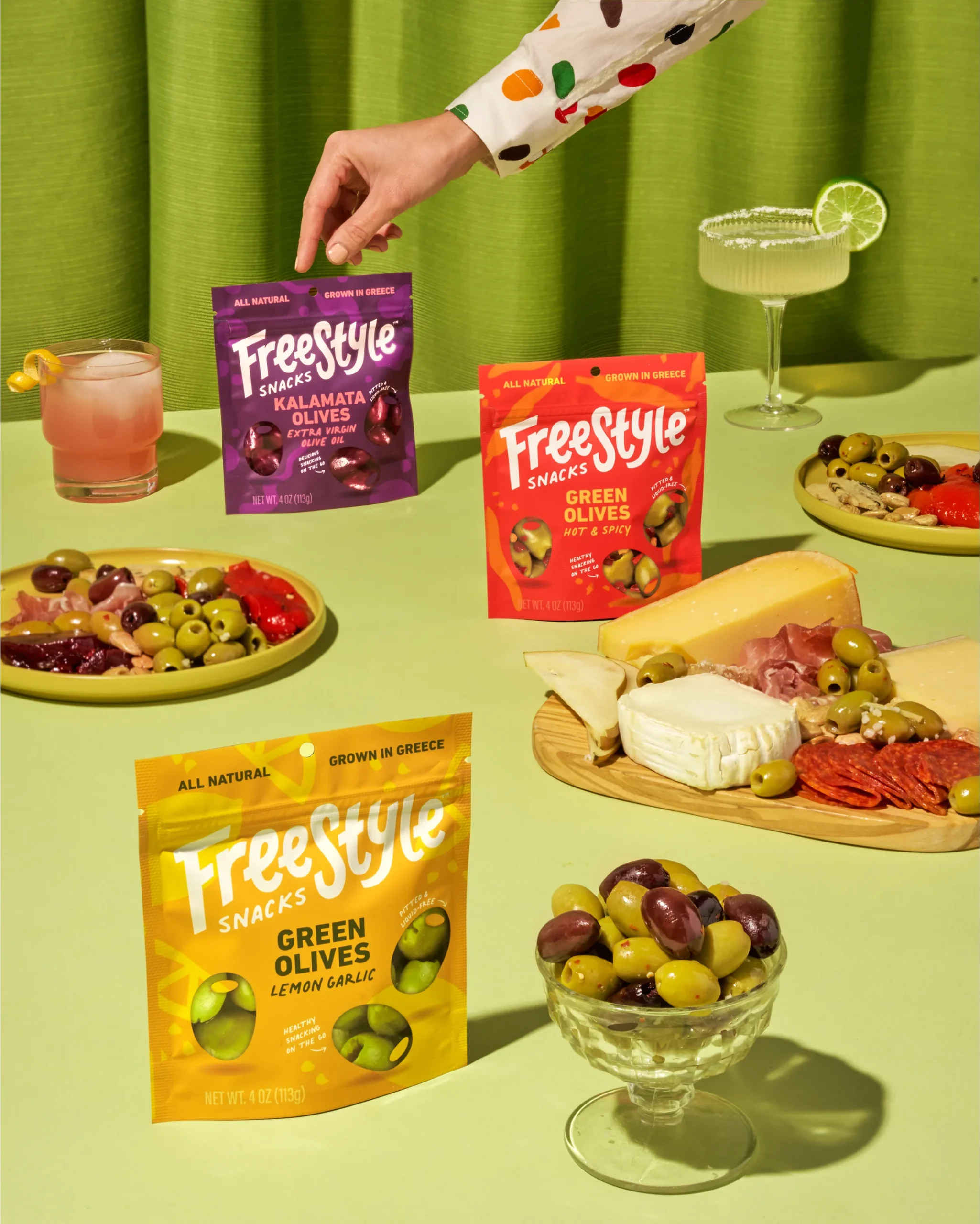
The pouches stayed the same: one serving, about 1.5 ounces, about 100 calories or less depending on the olive. No liquid. No mess. People started using them for salads, cheese boards, lunchboxes, after-gym snacks. Some poured them directly into martinis. Some froze them into ice cubes. Others kept them on hand for late-night snacking when the chips were gone.
Nikki expanded the team. Slowly. A few contractors. A few freelancers. Some help with fulfillment. She still did most of the outreach herself. When the olives started showing up in CVS and Target, she was the one talking to buyers, sending samples, reworking the shipping schedule when orders came in faster than expected. She didn’t hire an agency. She didn’t raise a huge round. She just kept making the olives.
In 2025, she added pickles. Not a big rebrand. Just a natural extension. Same pouch format, same concept—whole food, brined, seasoned, convenient. She launched three SKUs: Classic Dill Pickle Chips, Kickin’ Pickle Chips, and Garlic Dill Mini Pickles. No vinegar-heavy slices. No sweeteners. No corn syrup. Just cucumbers, brine, garlic, dill, and a little heat. Whole Foods got the exclusive for the first rollout.
The pickles sold well. Different audience, but similar reaction. Most people had never eaten a pickle that wasn’t cold, or straight from a jar. Some brought them to work. Some packed them in lunches. Some just kept them next to their keyboard.
Freestyle Snacks now ships to thousands of stores across the U.S. Whole Foods. Erewhon. Target. CVS. 7-Eleven. You can still buy them on the website too. The pouches haven’t changed much. The olives are still Greek. The pickles are U.S. grown. The seasonings are natural. The ingredients are printed clearly on the back.
Nikki is still running the company. Still figuring it out as she goes. She says she built it for herself—because she wanted olives that didn’t come in a jar and didn’t make a mess. Turns out a few other people wanted that too.