Caitlyn Schollmeier spent years working in maternity care – first as a medic in the U.S. Air Force, then as a labor and delivery nurse and birth doula. During this time she noticed a persistent problem: the standard-issue hospital gowns worn during childbirth were uncomfortable, undignified, and left many women feeling exposed. “I never liked seeing hospital gowns in the labor and delivery setting,” Caitlyn said. “Women should be free to wear anything they want… in whichever way makes them feel most comfortable.” Determined to improve the birthing experience, she began designing a better alternative. Caitlyn sketched her first labor and delivery gown as a way to “help humanize the childbirth experience,” creating a garment that would still allow full access for the medical team while providing style, comfort, and privacy for the patient. Initially she made these gowns just for herself and her doula clients – a comfortable, snap-closure dress that was functional for nurses and doctors yet made mothers feel “beautiful, capable, and seen” during childbirth.
In 2020 Caitlyn was expecting twins and put her homemade birth gown to the test during her own high-risk pregnancy. Complications landed her on six weeks of hospital bed rest where she lived in the soft, functional gown she had created. To pass the time she recorded a short TikTok video showing off the gown – intending to share it just with friends and family. But she accidentally posted it publicly, and the clip went viral overnight, racking up over 7 million views. Suddenly expectant mothers around the world were flooding Caitlyn with the same question: “Where can I get that gown?” Tens of thousands of people insisted she start selling her design, seeing it as a solution they had long been waiting for.
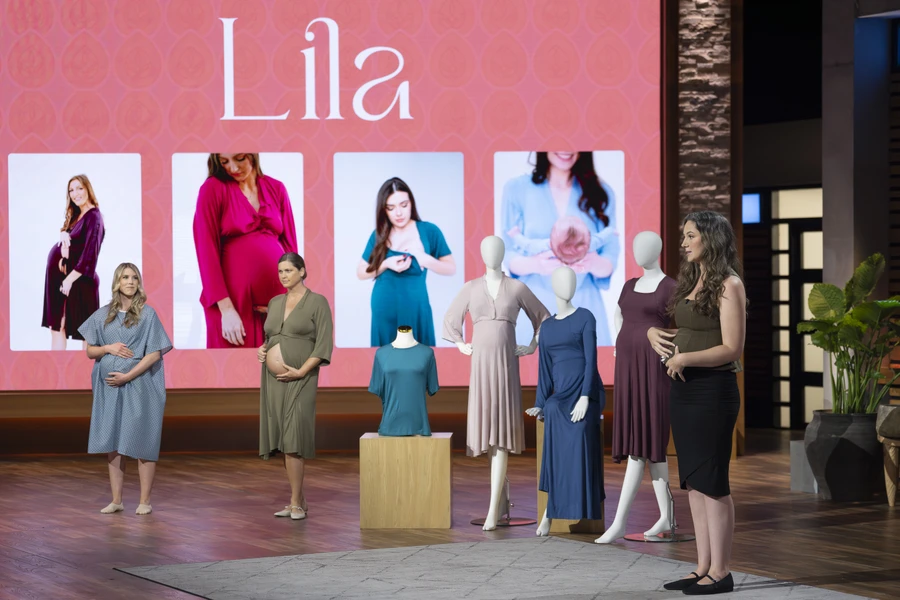
Confined to her hospital room, Caitlyn decided to act quickly. “From my hospital room, I applied for a business license, designed an online store, found a manufacturer, and set a launch date,” she later explained. In fact, she officially started her company – eventually named Lila Maternity – just two days before giving birth to her twins. The name “Lila” came from her original concept of “Lifted Labor” – combining “Li” from Lifted and “la” from Labor into a new word.
The timing was dramatic. Caitlyn’s twins were born premature, arriving the day before her planned launch amid a whirlwind of NICU duties. Yet she refused to delay. From the neonatal intensive care unit, with her newborns by her side, Caitlyn flipped her website live on the launch date and opened pre-orders for the gown. The response was explosive – 2,500 gowns sold out in less than two hours. What had begun as a personal project had officially become a business overnight. “It was at that point that I had three babies: my twins, and my third baby Lila Maternity,” Caitlyn quipped.
Fulfilling those early orders was a test of grit. With their rental home suddenly unavailable and two infants in tow, Caitlyn and her husband Matt had moved into a camper trailer in the middle of winter. From that tiny makeshift home, they packed every gown order by hand, working in shifts while caring for their premature twins. The experience was intense but it proved the demand was real. Buoyed by the viral launch, Caitlyn had tapped into a genuine need among birthing mothers – and Lila was born to meet it.
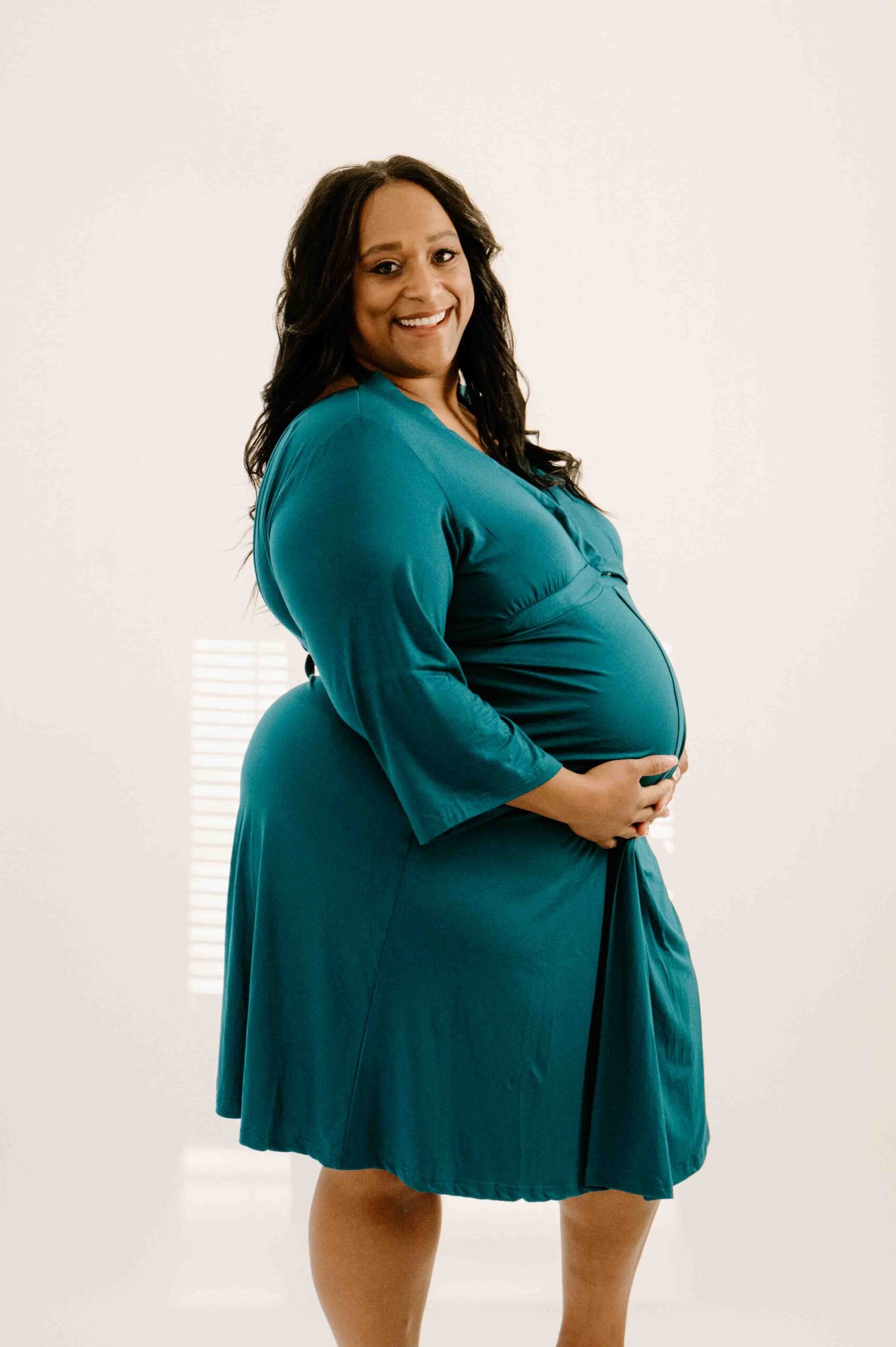
A model wears the Lila Labor & Postpartum Gown in emerald green, which looks more like a wrap dress than a typical hospital gown. Unlike the one-size-fits-all smocks hospitals provide, Caitlyn’s design is a thoughtfully constructed garment that feels like real clothing while still being fully hospital-compatible. Mothers can bring the Lila gown to the hospital and wear it during labor and delivery in place of the standard gown, confident that it won’t interfere with any medical procedures. Each feature of the gown was purpose-built based on Caitlyn’s firsthand understanding of labor needs and maternal comfort.
Some key features set Lila’s birth gown apart from the typical hospital gown:
Soft, soothing fabric: The gown is made from a premium blend of 92% modal (a fiber derived from beechwood) and 8% spandex, giving it a soft, stretchy feel that’s gentle on sensitive skin. This was intentional – sensations can intensify during labor, so a scratchy polyester gown can become a major irritation, whereas Lila’s smooth fabric helps mothers stay comfortable throughout. (The gowns are designed in the USA and ethically manufactured in China to meet these quality standards.)
Front-opening design for monitors: Traditional hospital gowns usually don’t open in the front, which means the cords from fetal heart monitors have to dangle between the mother’s legs. Lila’s gown solves this by unzipping or unsnapping down the middle of the belly, allowing monitor wires to be threaded out of the gown and up to the machines – keeping them out of the way and off the floor. This simple fix helps prevent tangles and tripping, letting moms move more freely.
Low-back access for epidurals: The gown has a low-cut back with secure snap closures, providing the necessary access for an epidural injection if needed. Instead of having to completely open or remove the gown (as often happens with standard gowns), the anesthesiologist can place an epidural through the Lila gown’s back opening. The lower back design also accommodates comforting measures like massage or TENS unit electrodes during labor.
Full coverage & privacy: One of the most common complaints about hospital gowns is how exposed they leave the wearer – they typically tie loosely at the back (if at all), often leaving backsides bare. Caitlyn’s gown was designed with modesty in mind: it wraps fully around and includes two interior tie closures to keep it securely closed. The sleeves are 3/4-length, and overall the gown fits more like a cozy wrap dress than an awkward smock. Women no longer have to feel they’re “flashing” everyone when they walk the halls in labor, yet nurses and doctors can still easily undo the ties when medical access is required.
Easy breastfeeding and bonding: Right after birth, skin-to-skin contact between mom and baby is crucial. Lila gowns have quick-release chest openings – the front panel unsnaps open so a newborn can be placed on the mother’s chest immediately, or for the mother to begin breastfeeding, without needing her to undress or reposition clothing. This is a big improvement over conventional gowns, which often require threading an opening over one shoulder or taking an arm out of a sleeve for nursing. With Caitlyn’s design, a new mom can unfasten the top in a second for that first embrace.
Reusable for postpartum wear: Unlike disposable hospital-issued gowns, Lila’s product is meant to be reused. The gowns are machine washable and durable enough to wear through labor, then take home and use during recovery and nursing in the postpartum period. Many moms continue to wear them as comfy nursing nightgowns after delivery. The idea is to provide something of lasting value rather than a forgettable garment you toss aside after birth.
In short, the Lila birth gown takes a garment that had barely changed in decades – the hospital maternity gown – and reinvents it with the mother’s comfort and dignity at the center. It’s essentially a cross between a wrap dress and a medical gown, designed by someone who deeply understands both worlds. By meeting all the practical needs (monitoring, IV and epidural access, quick changes) while looking and feeling like real clothing, it gives birthing women a sense of control and confidence that a flimsy tie-back gown never could.
After the initial viral success, Caitlyn focused on turning Lila into a sustainable business. She had effectively bootstrapped the company from her hospital bed, using pre-order revenue to fund production of the first batch of gowns. Those first 50 prototype gowns quickly became 2,500 units to meet the surge of demand. Once those were shipped (from the Schollmeiers’ crowded camper trailer headquarters), Lila continued as an online-only store for the next few years. Customers found the company through social media buzz and word of mouth, and the positive feedback poured in as more mothers tried the gown for themselves. Caitlyn also amassed a large following on TikTok and Instagram by sharing educational content about childbirth and patient rights, further cementing Lila’s reputation as more than just a product but part of a movement toward more empowering birth experiences.
By 2024 Lila had grown from a one-woman operation into a multi–million-dollar brand with thousands of customers. Caitlyn expanded the product line from the original gown to a collection of five different gown designs (each with patented features), reflecting various styles and coverage options. The company also broadened its sizing to accommodate a wide range of body types – offering four size categories from petite to plus-size – an inclusivity often lacking in standard hospital attire. As Lila’s catalog grew, so did its mission. The brand added matching baby swaddle sets, robes, maternity loungewear, nursing tops, and other items for expecting and new moms. “My ultimate goal is to provide thoughtful products to aid the journey into motherhood while recognizing the humanity, diversity and beauty of our customers,” Caitlyn noted, encapsulating Lila’s customer-centric philosophy.
Crucially Caitlyn brought her medical expertise to every decision. Lila is perhaps the only labor apparel company founded by a certified nurse midwife who has personally cared for birthing women. This insider perspective helped the brand earn trust among its core audience. Hospitals generally allow women to wear their own gown in labor if it meets needs, and some labor & delivery nurses even began recommending Lila gowns to patients who wanted more comfort and control. The company’s rapid growth and loyal customer base were a testament to how well Caitlyn’s creation resonated.
In early 2024 – about three years after launching online – Lila made the leap into brick-and-mortar retail. Caitlyn opened Lila Maternity, a boutique store in Hendersonville, Tennessee, giving the brand a physical home in the community. The boutique quickly became a go-to destination for expectant mothers in the area, stocking Lila’s signature labor gowns alongside other mom-and-baby essentials. The space isn’t just a shop; it also hosts childbirth classes and support groups, reflecting Caitlyn’s holistic approach to supporting mothers beyond just clothing. “I want our store to become a resource hub in our community – from products to learning to support,” Caitlyn said of this expansion.
From a TikTok in a hospital room to a thriving multi-product company, the journey of Lila has been anything but ordinary. What started with one nurse’s late-night sketch and a viral video has grown into a brand that is redefining what women wear when they bring new life into the world. And through it all – from packing boxes in a wintertime camper to patenting new designs – Caitlyn Schollmeier’s original mission remains at the heart of Lila: to ensure that every mother can feel comfortable, confident, and respected during one of life’s most powerful moments. The humble hospital gown, in her hands, became a vehicle for change – proving that even a small innovation can make a monumental difference in the childbirth experience.