Alfred Goodrich had been a cellist for most of his life. He played classical concerts, recorded original music, taught students, and ran a studio in Pennsylvania. Like most musicians who make a living off their instrument, he knew its strengths and flaws inside and out. He also knew what it meant to take a cello on the road—how the wood reacted to dry air, how sensitive it was to temperature shifts, how easily it could crack. At some point, he started experimenting with carbon fiber instruments, hoping to find a more durable option. The ones on the market held up better in difficult environments, but they didn’t sound the way he wanted. The tone was harsh. Too bright. Too synthetic. None of them felt quite right.

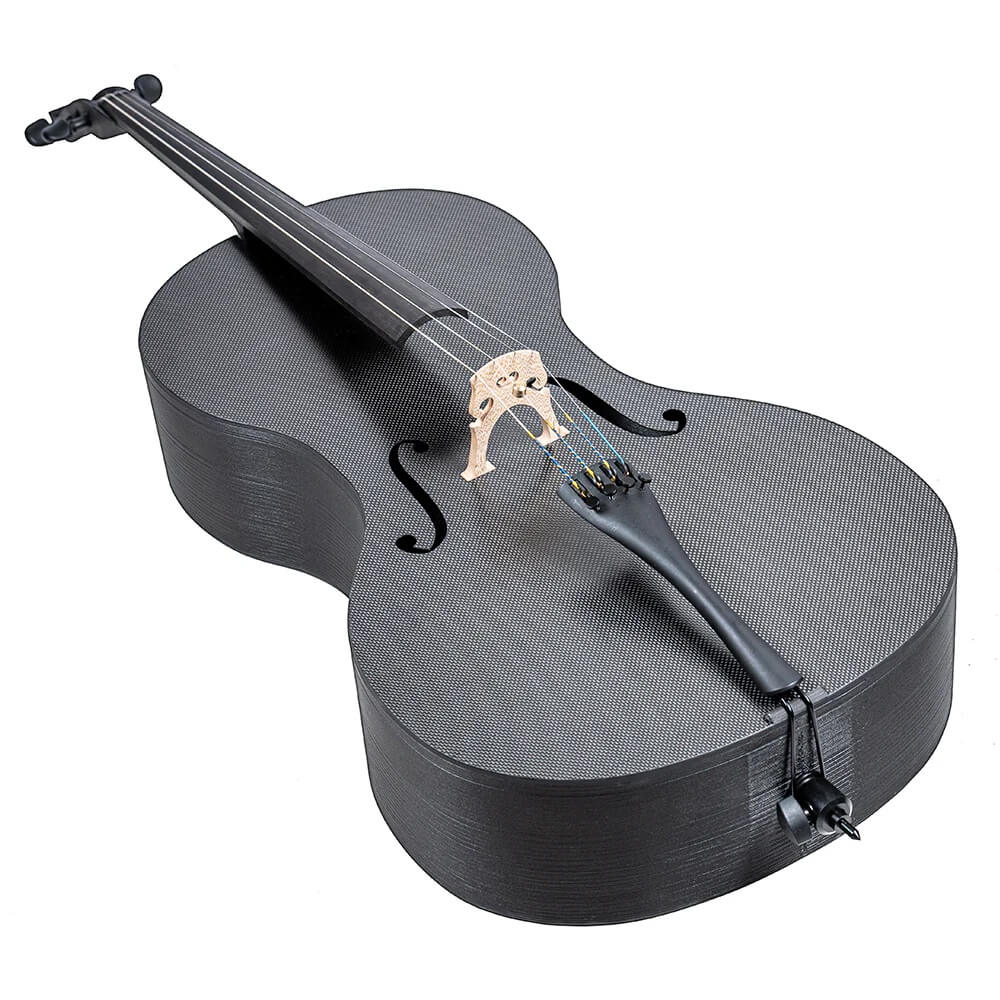
When the pandemic brought performances and travel to a halt, Alfred found himself with more time to work through an idea that had been on his mind for a while. Instead of waiting for someone else to make the cello he wanted, he started building his own in his garage. The design didn’t follow tradition. Instead of carved arching, he used flat carbon fiber sheets for the top and back. The ribs were 3D printed. Under the tension of the strings, the flat top curved just slightly inward and vibrated like a speaker cone. That gave it projection, but also warmth. The sound surprised him. It didn’t have the brash edge that he had come to expect from carbon fiber instruments. It felt closer to the tone of a wooden cello, just without the fragility.
As the idea started to take shape, Alfred teamed up with Elijah Lee, a young engineer with a background in additive manufacturing. Elijah translated Alfred’s handmade experiments into precise CAD models, and the two of them refined the structure together. The ribs were printed from carbon-fiber reinforced polymers, which added strength without extra weight. The top and back plates were cut from composite carbon fiber using a CNC process. They kept the important traditional elements—wooden bridge, soundpost, fingerboard, pegs—because those still worked best. What they changed was everything around them: the body, the neck, and the way it all came together.
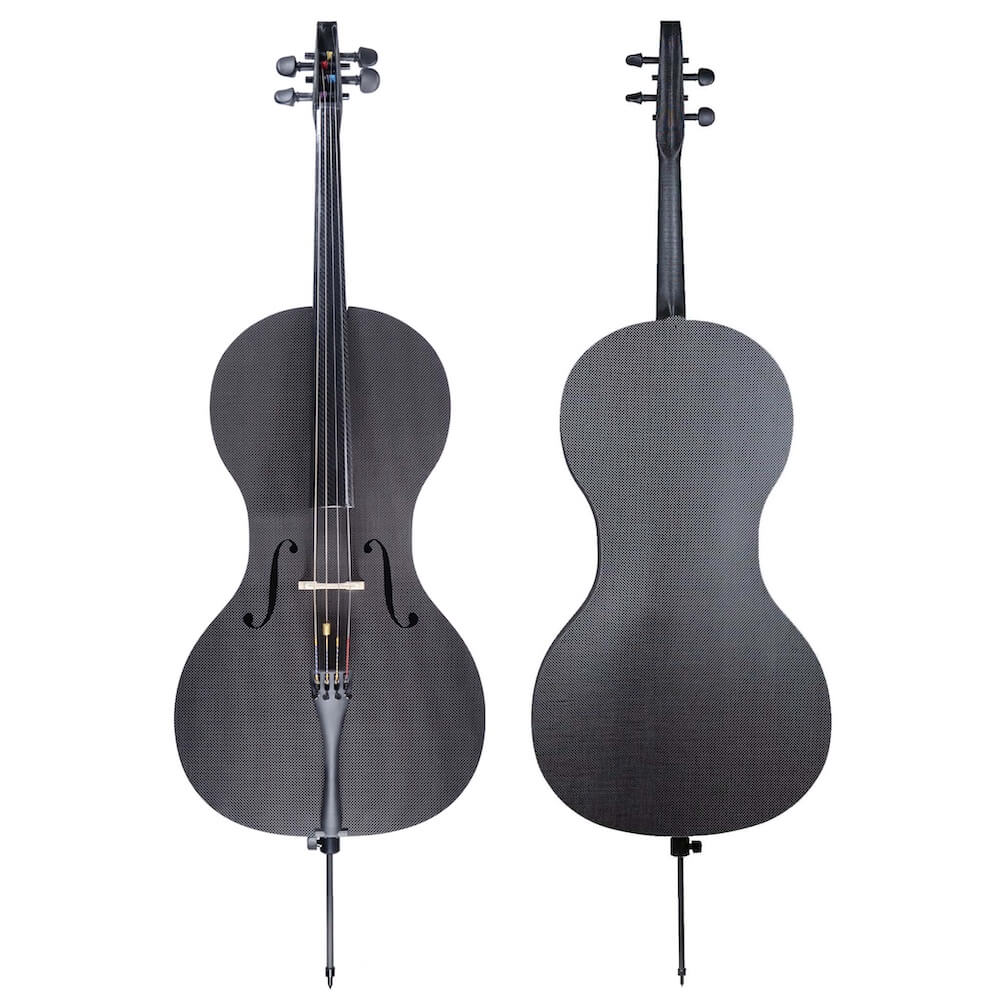
They also added something new. Traditional cellos need a luthier to adjust the neck angle or bridge height, which affects the string action. Alfred and Elijah built in a mechanism that lets a player adjust the neck projection using a small screw. It’s not flashy, but it means players can customize the feel of the instrument without needing a specialist, which saves time and money over the long run.
After months of testing and revisions, they filed a patent and launched the company as Forte3D. Alfred built each cello by hand in a small Pennsylvania workshop. The build process took about a day, a fraction of the time needed for a carved wooden cello, and because most parts were cut or printed, it allowed for consistency without sacrificing craftsmanship. The cello sold for around $3,000, priced below most entry-level professional instruments, but still built with serious musicians in mind.
One of those musicians was Mike Block, a Juilliard-trained cellist known for performing with Yo-Yo Ma’s Silk Road Ensemble and for blending classical with folk, pop, and world music. Mike tried out a Forte3D cello and kept returning to it. He liked the tone, the playability, and the fact that he didn’t have to worry about babying it when traveling or playing outdoors. After touring with it for a while, he officially joined the company as a partner and musical advisor. His role wasn’t just about endorsing the product—he gave detailed feedback on design, sound, and feel, helping to shape future builds based on what working musicians actually needed.
With Alfred handling production, Elijah leading engineering, and Mike offering a musician’s perspective, Forte3D started to find its rhythm. Word spread among cellists, and players who had written off synthetic instruments began to take a second look. The design didn’t try to replicate wood; it just worked in a different way. The instrument was lightweight, stable, and surprisingly responsive.
After refining the cello, they applied the same approach to a violin. It followed the same construction logic—flat carbon fiber plates, 3D printed ribs and neck, and traditional wooden fittings. Like the cello, it was hand-assembled, built to order, and aimed at musicians who wanted a reliable instrument with a natural tone and low maintenance.
Each instrument that leaves the Forte3D workshop is built with the same basic philosophy: take materials that weren’t part of the violin-making tradition, use them intelligently, and create something a musician would want to play—not just in theory, but on stage, in the studio, or on the road. That’s still the goal today. And yes, Alfred is still the one building them.