Brian Zibricky came up with Pup Stack after his family brought home a puppy named Cooper in late 2019. The Zibrickys had wanted a dog for years, but Brian and his wife, Sue, both worked outside the home and their two children were in school. That changed after Sue developed multiple sclerosis and Brian began working from home to help care for her. Cooper joined the family soon afterward.
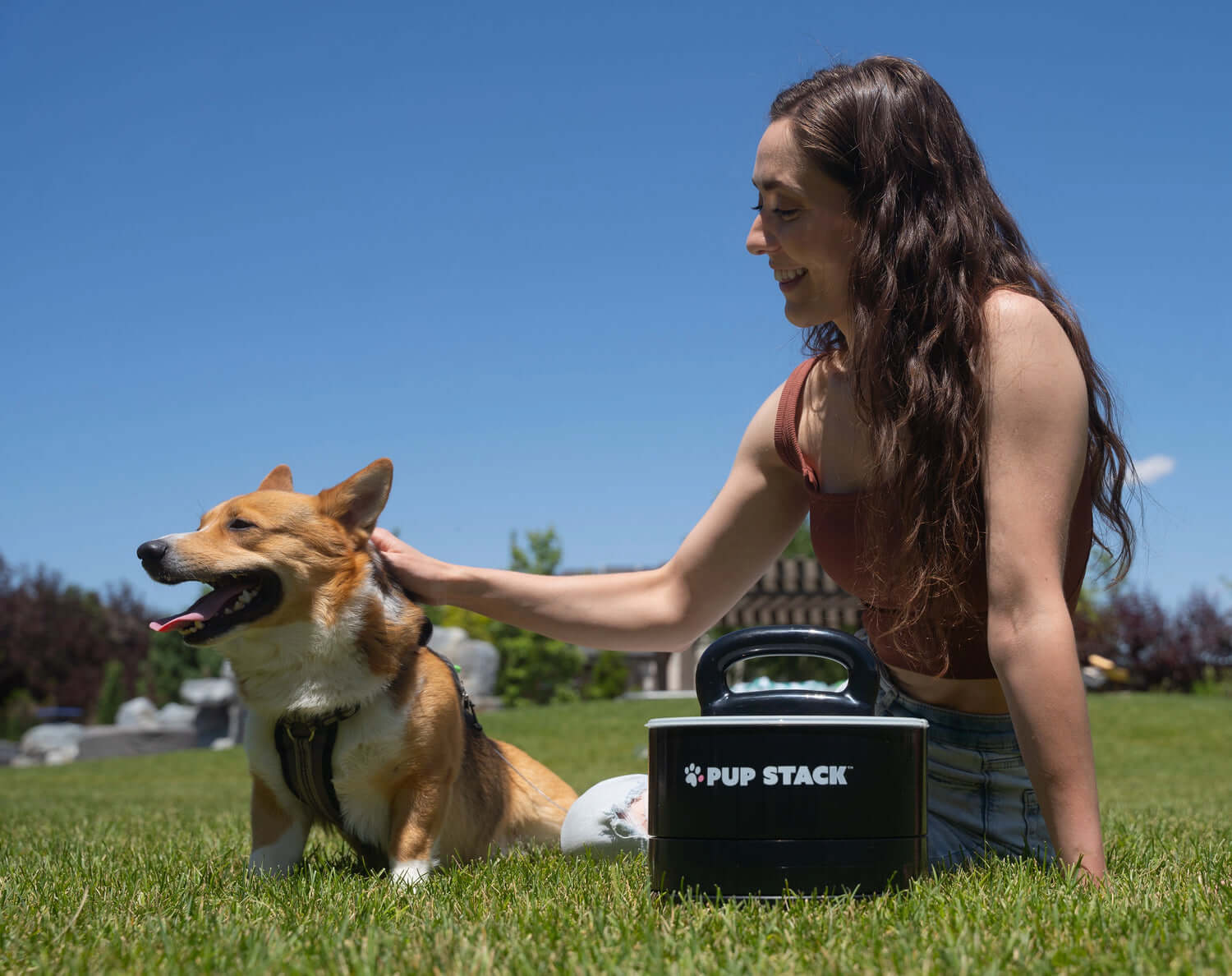
The puppy created a new set of practical problems. The family’s backyard was not fully fenced, and Brian wanted Cooper to be able to spend time outside on their concrete patio. Taking him away from home meant carrying treats, waste bags, toys and water while also finding some way to keep him nearby. Holding a leash worked but tied up one hand. Attaching it to a fixed object often left Cooper tangled around whatever he was tied to.
Brian began sketching a portable anchor that could work without being driven into the ground. His design used a weighted base with a retractable tie-out line that could be locked at different lengths. The unit could rotate as the dog moved around it, while a storage compartment held the smaller items an owner might need away from home. Removable bowls provided a place for food and water.
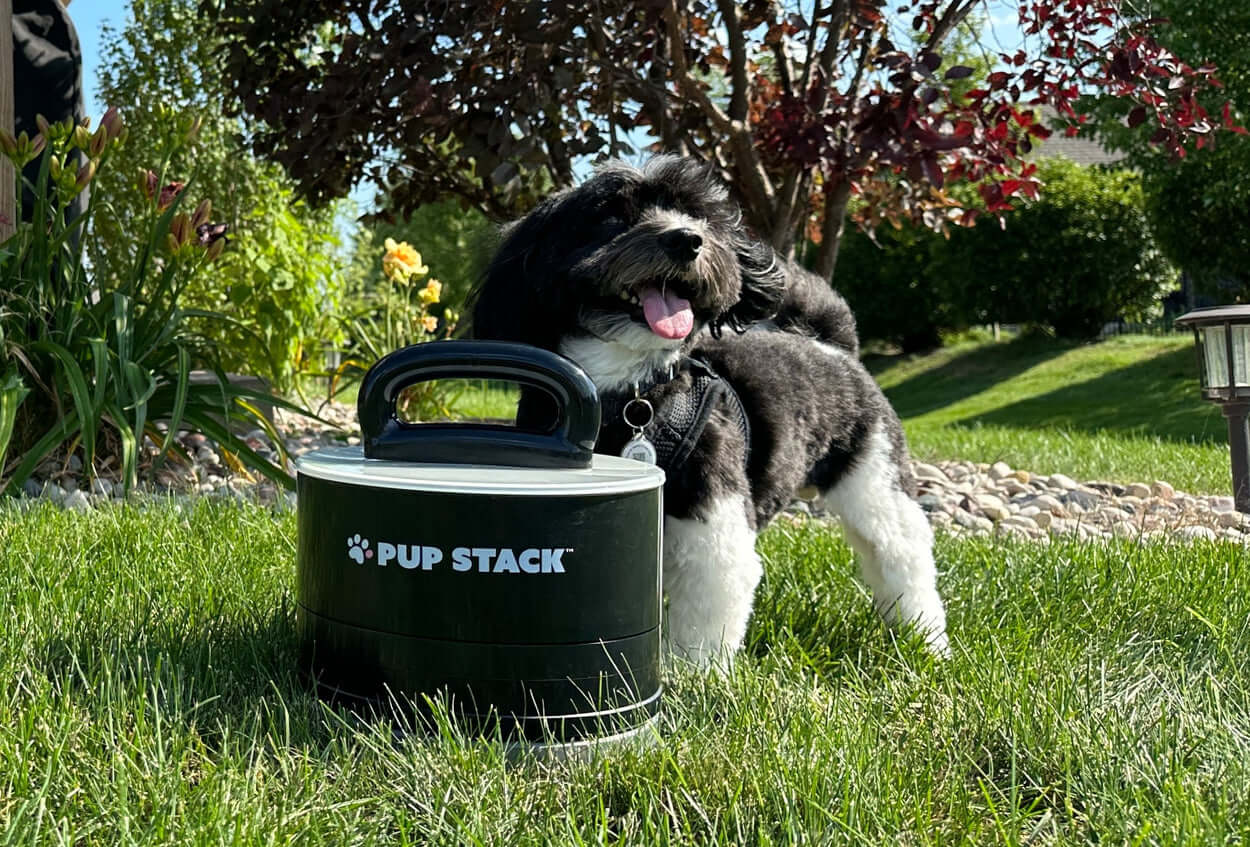
The weight became one of the main parts of the design. Brian wanted the anchor to be heavy enough to hold a dog but light enough to carry. Rather than make a single heavy unit, he developed a stackable system. The base contained a 10-pound plate, and more plates could be added as needed for larger dogs. The finished product was designed for dogs weighing up to about 40 pounds.
Brian took his sketches to a product development firm, which helped turn the idea into a product that could be manufactured. The design changed through several rounds of prototypes and testing. An early straight carrying handle became a rounded one, and a storage container that had been planned as an optional accessory became part of the main unit after Brian sought feedback from other dog owners.
Pup Stack reached the public through a Kickstarter campaign in October 2022. Brian set a $10,000 funding goal and raised $28,486 from 256 backers during the 35-day campaign. The crowdfunding run gave him enough support to move beyond prototypes and into production. By 2023, Pup Stack had gone through design, sourcing and sampling and reached mass production.
Brian brought a background in marketing to the business. He had spent years working in marketing and product roles while developing Pup Stack on the side. The business remained founder-run as he handled the work of building awareness for a product that did not fit neatly into the usual categories of dog leashes, tie-outs or gates.
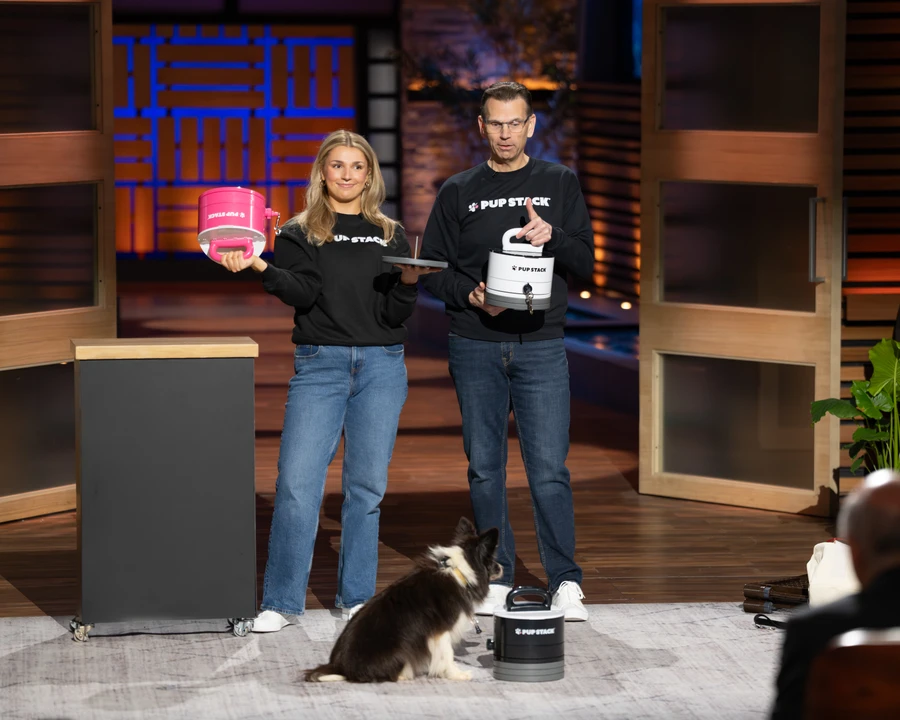
His daughter Kayla became involved as the business developed. She studied at Illinois State University and went into sales after college, joining Motorola Solutions in 2024. By 2026, she was appearing alongside her father to represent Pup Stack.
The business also began adding products around the original anchor. By 2026, Pup Stack was selling the anchor in several colors along with extra weights, travel accessories, dog treats and plush toys modeled after the Pup Stack. The original product remained built around the same problem Brian had encountered with Cooper: giving a small dog room to move without requiring a permanent anchor point or someone holding the leash.