
Avital Ungar has always been in the business of getting people to eat things together. For over a decade, she ran food tours and events under the name Avital Food & Drink Experiences. Walking tours, cocktail tastings, team offsites where someone ends up eating goat cheese off a rooftop in San Francisco. That sort of thing. Her job was basically hosting parties for strangers, then making sure no one left hungry or bored.
Then 2020 happened, and suddenly walking around and sharing appetizers with a group of 18 people didn’t seem like a good idea. Avital’s team pivoted into remote culinary events—kits in the mail, chefs on Zoom, corporate teams trying to caramelize onions in their own kitchens. It kept them afloat. It also gave her time to think.
At the end of 2021, during her company’s holiday party, someone said “let’s make gingerbread houses,” and someone else said “please, no,” so they tried something different. Instead of gumdrops and frosting, they used cheese spread and crackers. Instead of peppermint shingles, they used salami tiles. They made charcuterie chalets. It was weird and delightful. It made a mess. It also sparked something. Why was there no gingerbread-house equivalent for grown-ups who wanted to play with their food but didn’t want a roof made out of sugar wafers? Avital couldn’t stop thinking about it. So she built a company around it.
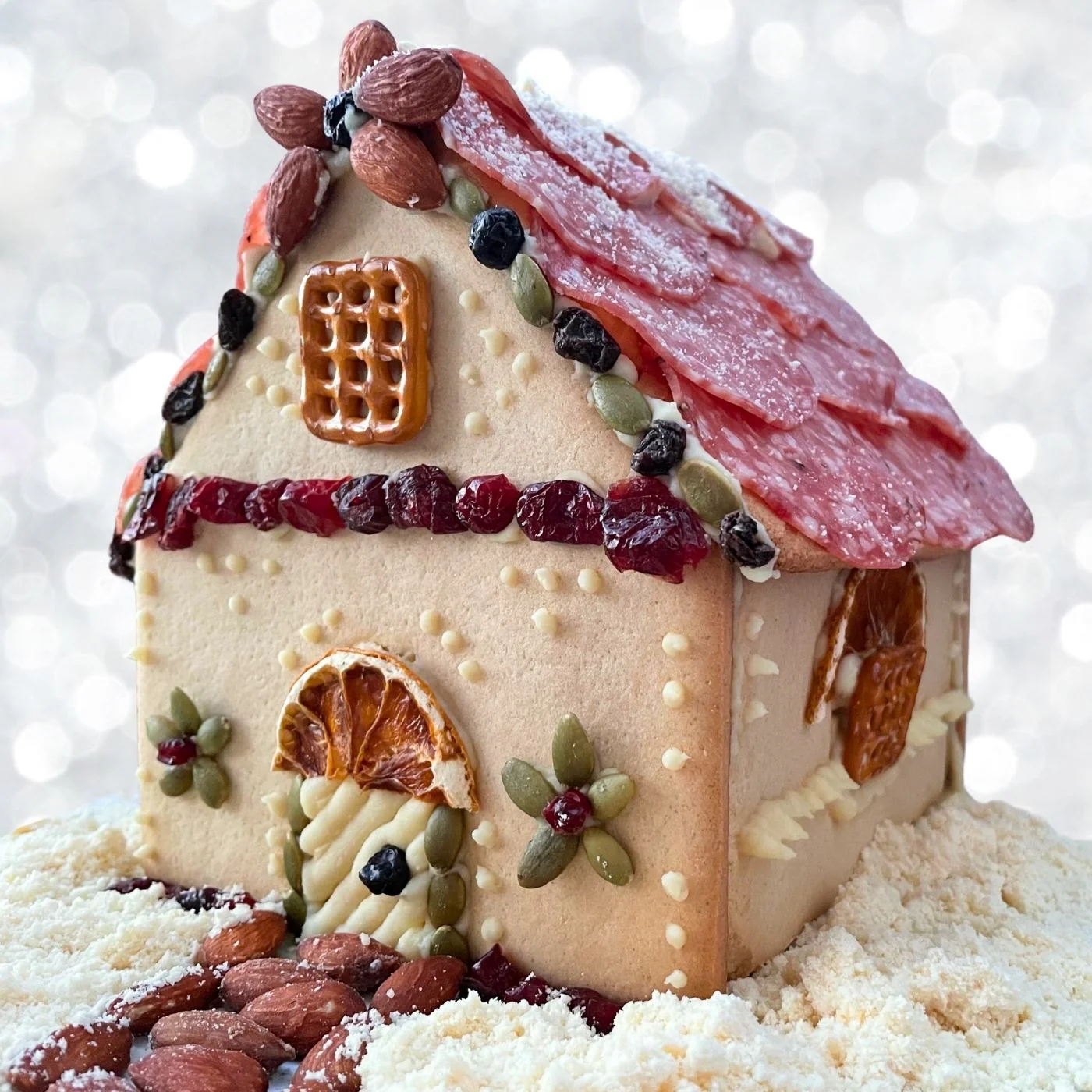
What’s in the Box
The Charcuterie Chalet kit is exactly what it sounds like. It’s a little house, made from flatbread crackers, held together with cheese spread, and covered in meat shingles and edible landscaping. There’s parmesan snow. There are pretzel-stick fences. There’s enough salami in one box to shingle a roof and still snack on the leftovers.
The kit is shelf-stable and doesn’t require refrigeration, which is one of those logistical miracles that doesn’t get talked about much but matters a lot when you’re shipping perishable snacks in December. It comes with all the materials pre-packed: crackers, spreadable cheese, cured meat, plus herbs, dried fruit, and a how-to guide that’s short enough to follow even after a glass of wine.
You build the house. You decorate it with olives and pistachios. You admire your work. Then you eat it.
From Party Joke to Product
The first version was scrappy. Avital pulled together ingredients from local shops and packed a few test kits. The price point was high—around $130 for a full setup with meats, cheeses, nuts, the works. More like a premium food box than a casual kit. But people loved it. The photos got passed around. People started asking where they could buy one.
By 2024, she’d streamlined the concept into something ready for retail. She adjusted the ingredients, scaled the packaging, and found a way to make the kits last on shelves without losing the fun. She also lowered the price, so someone could grab a Charcuterie Chalet at the grocery store the same way they might grab a gingerbread house kit—on a whim, or as a party favor, or for an awkward office Secret Santa.
They launched the kits in November 2024 and landed in stores like World Market, H-E-B, Spec’s, and Big Lots. They also sold directly through the Edible Architecture website, which featured videos of people building chalets while laughing and gently arguing about meat placement.
The Internet Had Thoughts
One TikTok video showing the Chalet kit got almost 5 million views. People were into it. Some loved the idea. Some were confused by it. Others immediately ordered six kits and planned a girls’ night around cheese-gluing. Someone built an entire meat house village. Someone else replaced the flatbread with gluten-free crackers and posted their “Charcuterie Yurt.”
The point was: people were having fun with it. And that’s what Avital had been doing for years: making food into a shared experience. The chalet just happened to be smaller and saltier than usual.
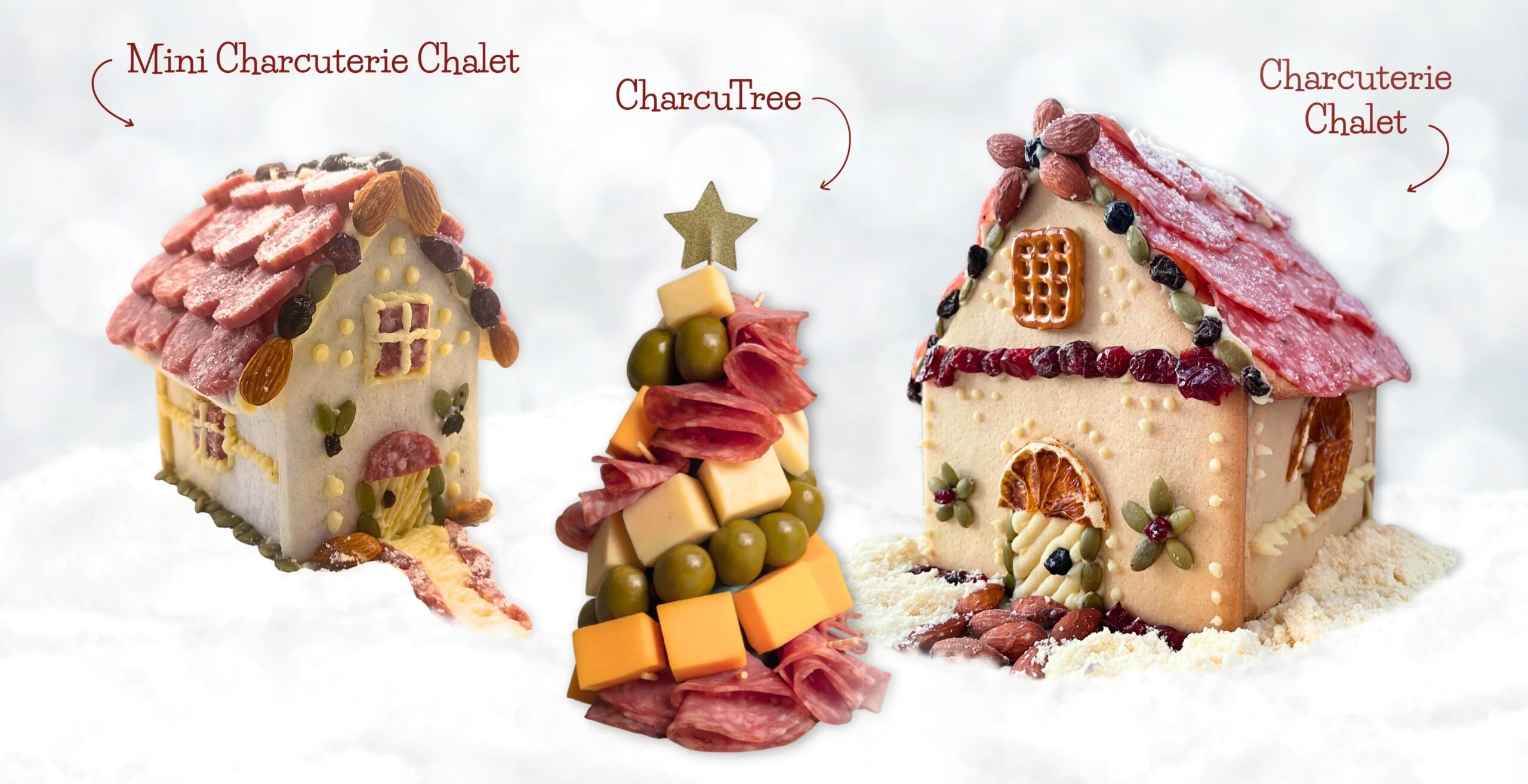
There’s a Tree Now, Too
After the house came the tree. In 2024, Avital launched a second kit: the CharcuTree. It’s exactly what it sounds like—an edible Christmas tree made out of cheese cubes, salami folds, olives, herbs, and whatever else you feel like skewering. It’s kind of like a savory cake pop situation, except the whole thing looks like a Christmas centerpiece. It comes with a wooden stand, a star topper, and instructions on how to stack everything so it doesn’t tip over. It’s festive. It’s oddly satisfying. And like the chalet, it’s meant to be built, admired briefly, then devoured.
Who It’s For
You don’t need to be a foodie or an architect. You just need to be the kind of person who thinks building a meat house sounds better than baking cookies. Some people do it solo. Some turn it into a family tradition. Some set it up as a date night activity or bring it to a holiday party where it sits on the counter like a snack version of a gingerbread nativity scene.
It’s less about precision and more about the process. The meat slides around. The roof might collapse. You eat the fence halfway through. It’s fine. That’s the point. Avital once said her favorite feedback was from someone who wrote, “We tried to follow the directions but drank too much wine and just ended up eating everything straight from the tray. 10/10.”
The Person Behind the Cheese Glue
Avital runs the company from San Francisco, where she still leads her food events business and keeps a wall covered in sticky notes of weird food ideas. She likes things that make people laugh, pause, and eat together. She describes her business model as “serious about fun,” which is a pretty accurate summary of the entire Edible Architecture vibe.
The kits are seasonal, for now. They come out around the holidays, and once they sell out, that’s it. At least until next year. She’s hinted at other designs, maybe even non-winter ones, but hasn’t said more. Which makes sense. It started as a party activity. It turned into a side hustle. Then a box. Then a shelf in a national store. Then five million people arguing on TikTok about whether it’s wasteful to build a salami chimney.
And somehow, that seems like the natural arc for a company whose whole thing is: build it, snack it, share it, and don’t overthink the roof pitch.
