
Aaron Israel and Sawa Okochi opened Shalom Japan in Williamsburg after years of working side by side in New York kitchens. They had already built a life together, and opening a restaurant that blended their backgrounds—his Jewish, hers Japanese—felt like the most natural thing in the world. The menu wasn’t built around a concept or a gimmick. It was just the kind of food they wanted to make. Dishes drifted between cultures, or sometimes landed right in the middle. A bowl of lox with pickled daikon and wasabi tobiko. A version of okonomiyaki topped with sauerkraut and pastrami. And then there was the matzoh ball ramen.

That one started as a conversation between the two of them. Aaron had already been working on a soup that brought his matzoh ball recipe into new territory. He tried egg noodles first, then thickened the broth and made it richer. Sawa suggested ramen noodles instead. The idea stuck. The broth deepened into something closer to a proper ramen base, the noodles held their shape, and the matzoh balls soaked up flavor the way they were supposed to. The dish stayed on the menu and quietly became the one people kept ordering, even when the weather didn’t call for soup. It never got renamed or reworked. They just kept making it.
Eventually, customers started asking if they could take it home. Not leftovers from dinner, but an actual version they could reheat later or send to someone. At first, they didn’t have the bandwidth to think about it, but in late 2024, they started putting together a kit that packed the whole dish into a box you could ship.
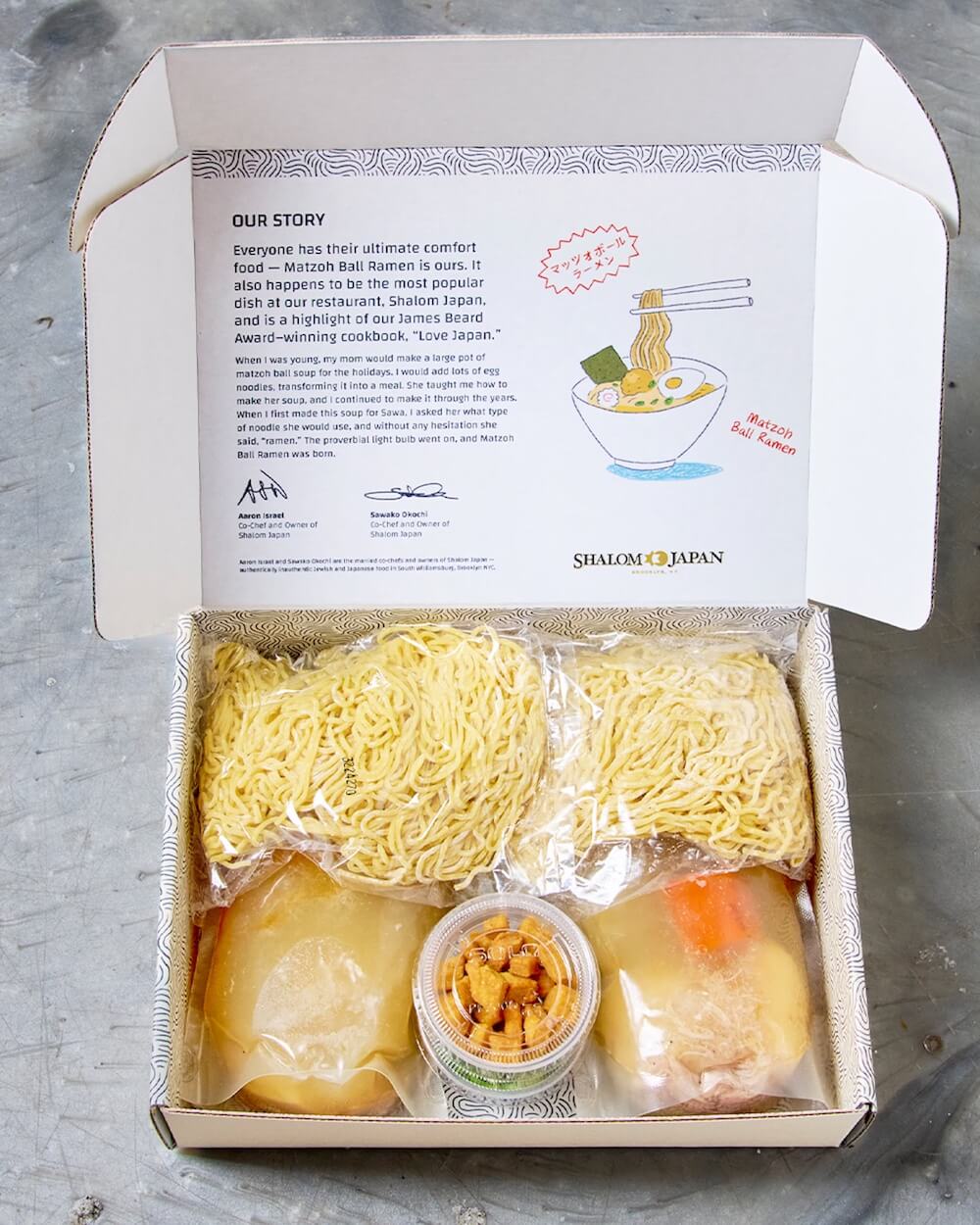
They didn’t cut corners. Each kit includes two sealed pouches of chicken broth, each with two matzoh balls inside. The noodles are packed dry and cook quickly. Scallions are sliced and portioned. Soup mandels—those tiny, crispy broth crackers—come in a little bag. There’s a small jar of their house-made chili sauce, the same one they serve in the restaurant. The whole thing is boxed and insulated, with simple instructions to reheat the soup in the pouch, boil the noodles, and combine it all in a bowl. It’s designed to be easy, but it’s not instant. It’s meant to taste like what you’d get if you were sitting in their dining room.
They ship it through Goldbelly and offer it for pickup locally. It holds in the fridge for a week or the freezer for a few months. The box serves two people, and it’s priced in the same range as a restaurant meal. Some people order it as a gift. Others keep it on hand for holidays or cold weekends. The packaging is clean and understated. There’s nothing flashy about it.
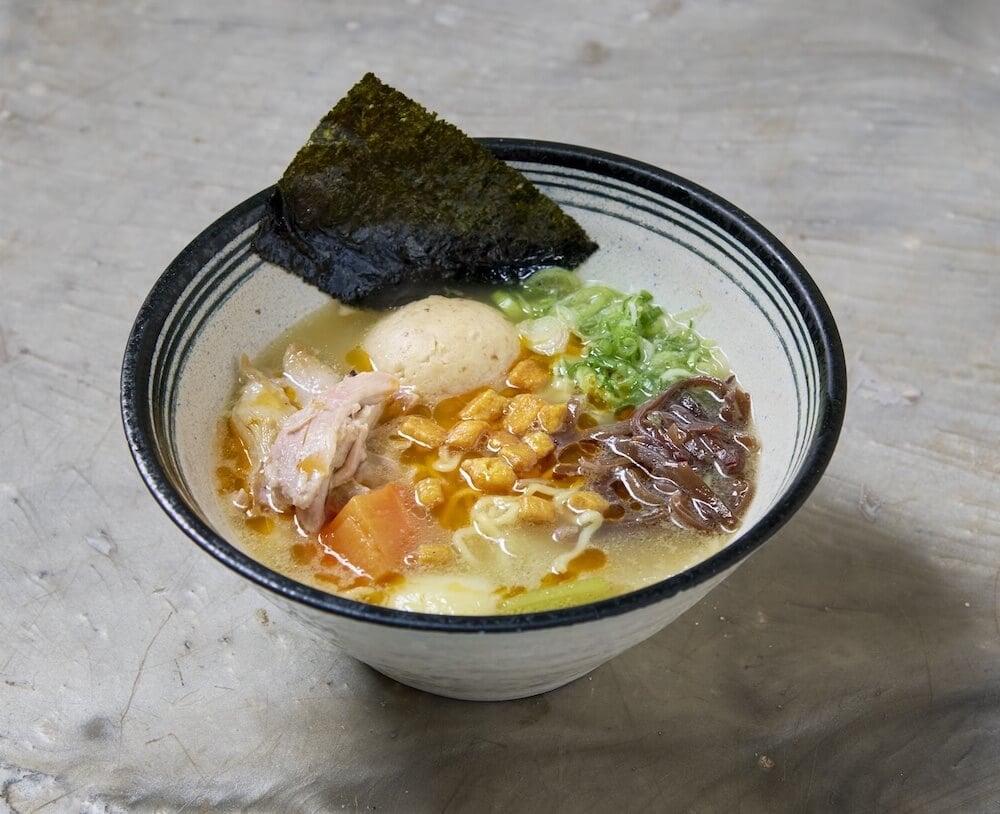
What made the dish work in the restaurant—its balance between comfort food and careful technique—is what makes the kit work, too. The broth isn’t just a base. The matzoh balls are soft but structured. The noodles add bounce. The garnish brings heat and crunch. It’s a bowl that tells the same story Aaron and Sawa have been telling for over a decade. Not fusion for the sake of novelty, just two traditions placed side by side, treated with care, and eaten together.
