Rob Wright was unloading boxes in his garage when he missed the tape line with his utility knife and sliced the contents inside. It wasn’t the first time. He had ruined a gift before even opening it, and he’d seen others do the same—cutting through box flaps and into what was underneath.
He wanted to find a simple way to avoid damaging the contents of a package while still cutting through cardboard. The idea wasn’t to replace a utility knife entirely, but to create an alternative for opening shipping boxes that kept the blade above the surface of what was inside. He started working on a solution in his garage, cutting and folding plastic prototypes by hand and testing different blade angles.
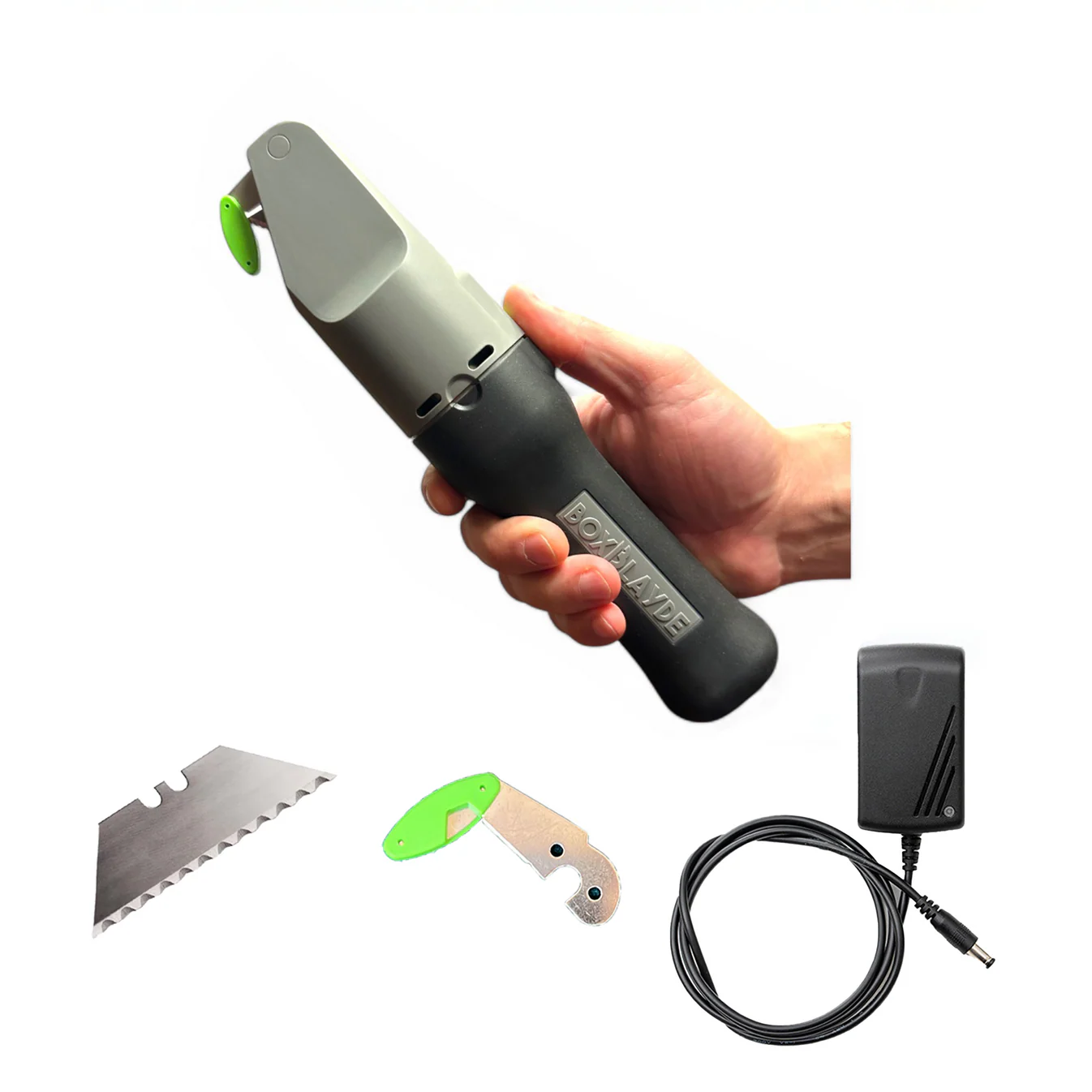
After several months of experimenting, Wright developed a flat tool that could be held like a standard box cutter but with a raised lip to guide the blade just below the tape line. The blade would cut through the seam of the cardboard, but because of the built-in guard, it wouldn’t sink deeper. He called it the BoxBlayde.
The design looks like a flattened “L.” It’s made from durable ABS plastic and includes a standard replaceable utility blade held in place with a tension clip. A rounded guard lip on the bottom edge acts as a spacer, lifting the cutting edge just slightly above the interior surface of the box. That distance—about 1/16 of an inch—keeps the blade from reaching into the box while still cutting through the tape and top layer of cardboard.
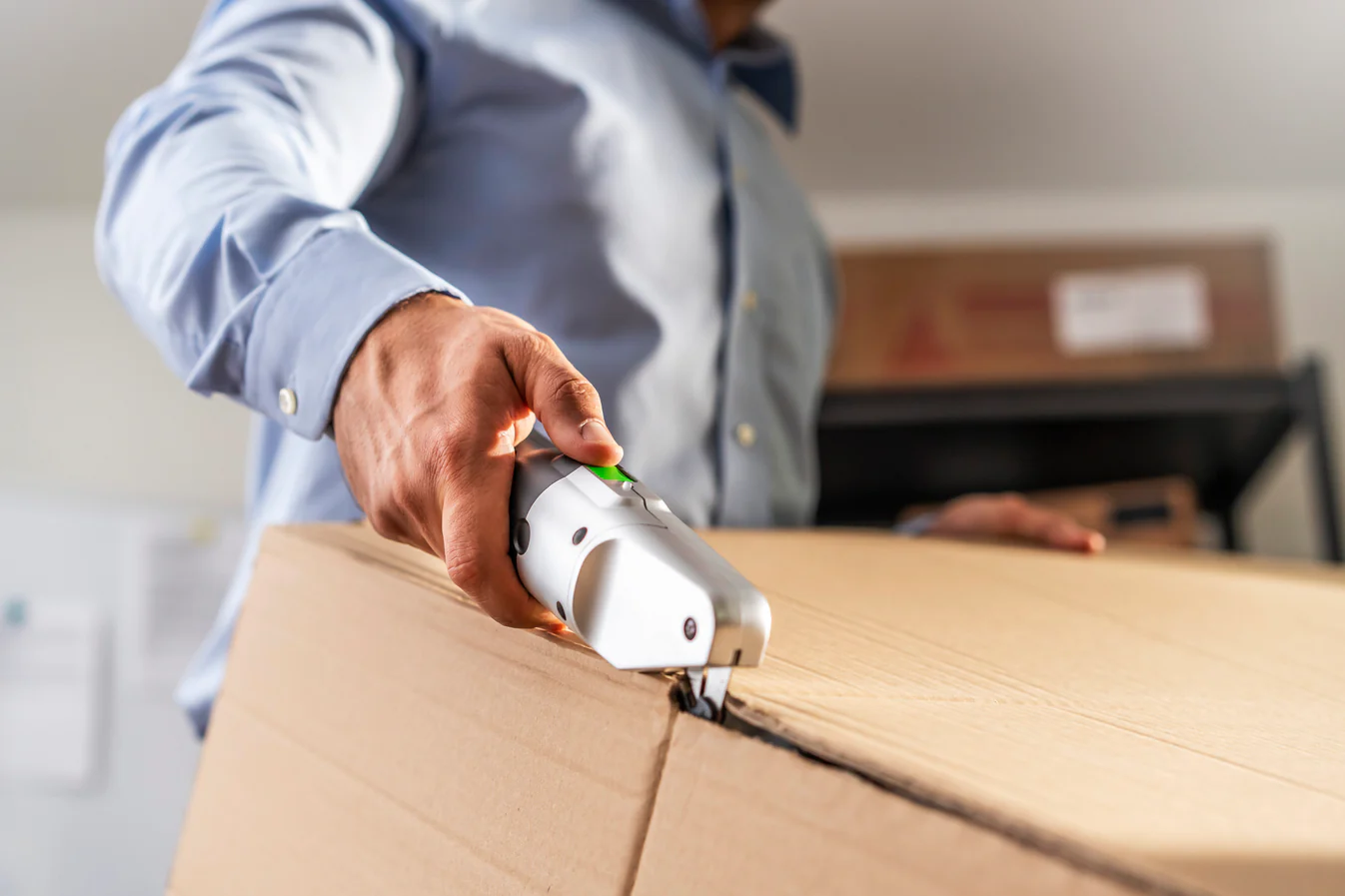
BoxBlayde is meant to be used one-handed, with a finger rest and grip cutouts for control. It’s small enough to fit in a pocket or be clipped to a tool belt. Unlike retractable knives or slicers with exposed edges, BoxBlayde’s cutting surface is recessed behind the plastic lip, reducing the chance of accidental contact with skin or other surfaces.
Wright filed for a patent and began working with a US-based plastic injection molding company to produce the tool in batches. He launched the product on his own website and through direct sales, offering the tool in several colors. Each unit is packaged with a pre-installed blade and includes instructions for replacement.
The business model is built around e-commerce and small-batch manufacturing. Wright manages most aspects of the operation, from design and supply chain coordination to marketing and order fulfillment. He offers discounts for bulk orders and promotes BoxBlayde to individuals, small businesses, shipping departments, and warehouse teams.
The tool has been picked up by customers who open dozens of boxes a day and want to avoid damaging goods during unboxing. It’s also been used by people in fulfillment, retail, and even at home for opening personal deliveries.
Wright continues to run the business independently. He sources the blades and plastic components from US suppliers and assembles units for shipping from his home base. BoxBlayde remains a single-product company with a focus on improving a small, routine task—opening a box without destroying what’s inside.