
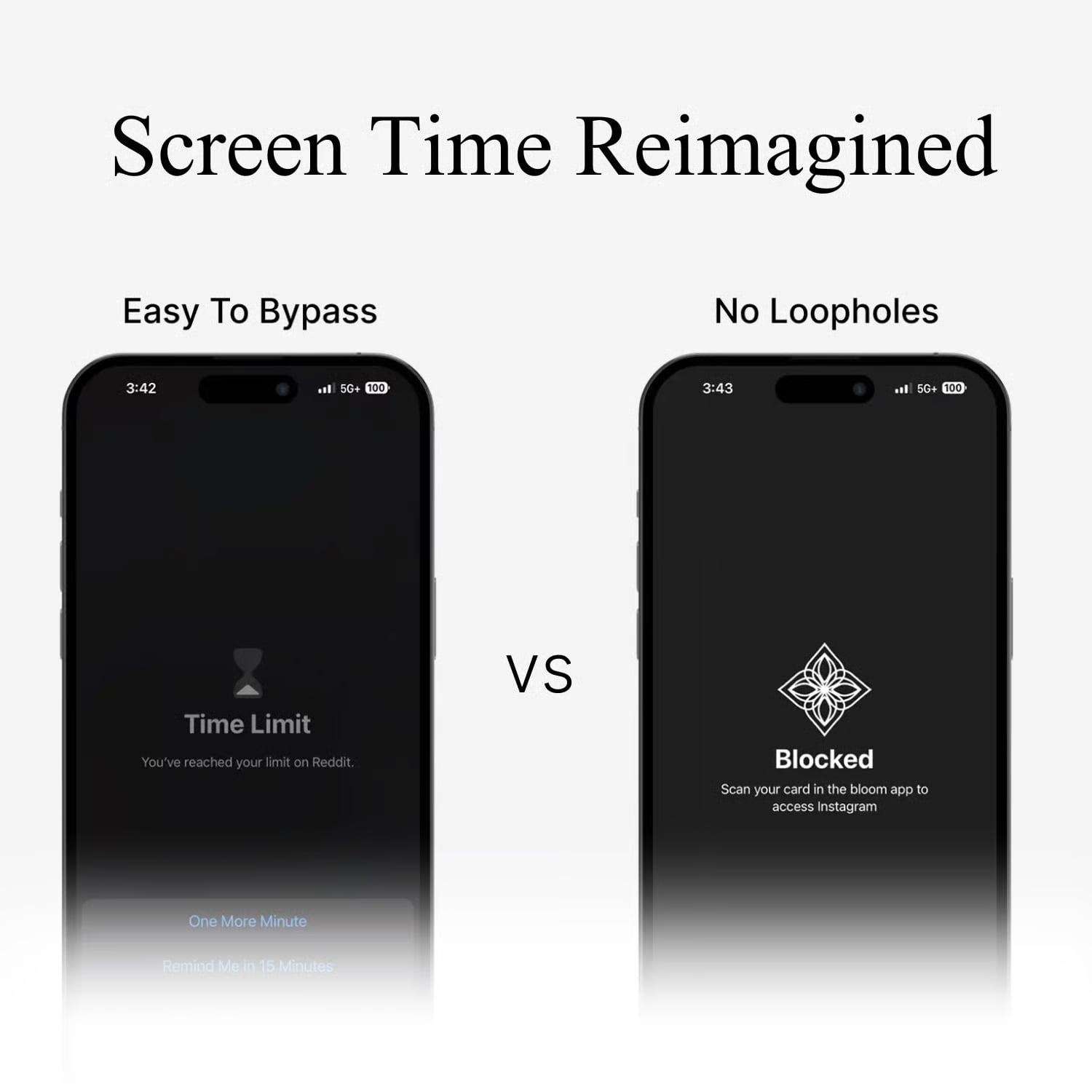
Bloom began as a small project between two college students trying to solve a personal problem. Danny Super Chmaytelli and Giancarlo Novelli met while studying at UCLA and found they were both struggling to control how much time they spent on their phones. They tried built-in screen time tools and productivity apps, but those systems were easy to bypass. That led them to look for a solution that added a physical step to the process.
They built an early version for themselves and their friends. The idea was simple. A small card would act as a key, locking and unlocking access to selected apps. Because the card had to be physically tapped to a phone, it created distance between the user and the apps they wanted to avoid. What started as a personal fix began to spread among other students who faced the same issue.
Chmaytelli and Novelli chose to keep working on the idea after seeing that others were interested. They put aside internships and used their own savings to develop the product further. The work moved from a dorm room project into a formal business, with a small team focused on refining the hardware and supporting app.
Bloom operates with a combined hardware and software model. Users select which apps or websites they want to block through a mobile app, then use the card to activate or end a focus session. The structure relies on that physical interaction rather than only software controls. The product is sold online and has also been introduced through campus networks and early user groups.
Growth followed as more users adopted the system and shared it with others. Early batches sold to students expanded into a wider customer base, and the product gained attention beyond campus, including a television appearance and media coverage. By 2026, Bloom had reached tens of thousands of users and reported millions of hours of reduced screen time among them.
The business remains closely tied to its origin. Two founders continue to guide development, building on an idea that started as a personal workaround and grew through direct use by people facing the same problem.